Olive Harvest
Harvest diary: eleven days in Messenia with the first pick
Rain, altitude, a mill running past midnight, and the narrow window that decides an entire vintage.
Nikos Papadakis — Harvest Director, Messenia · 14 February 2026 · 9 min read
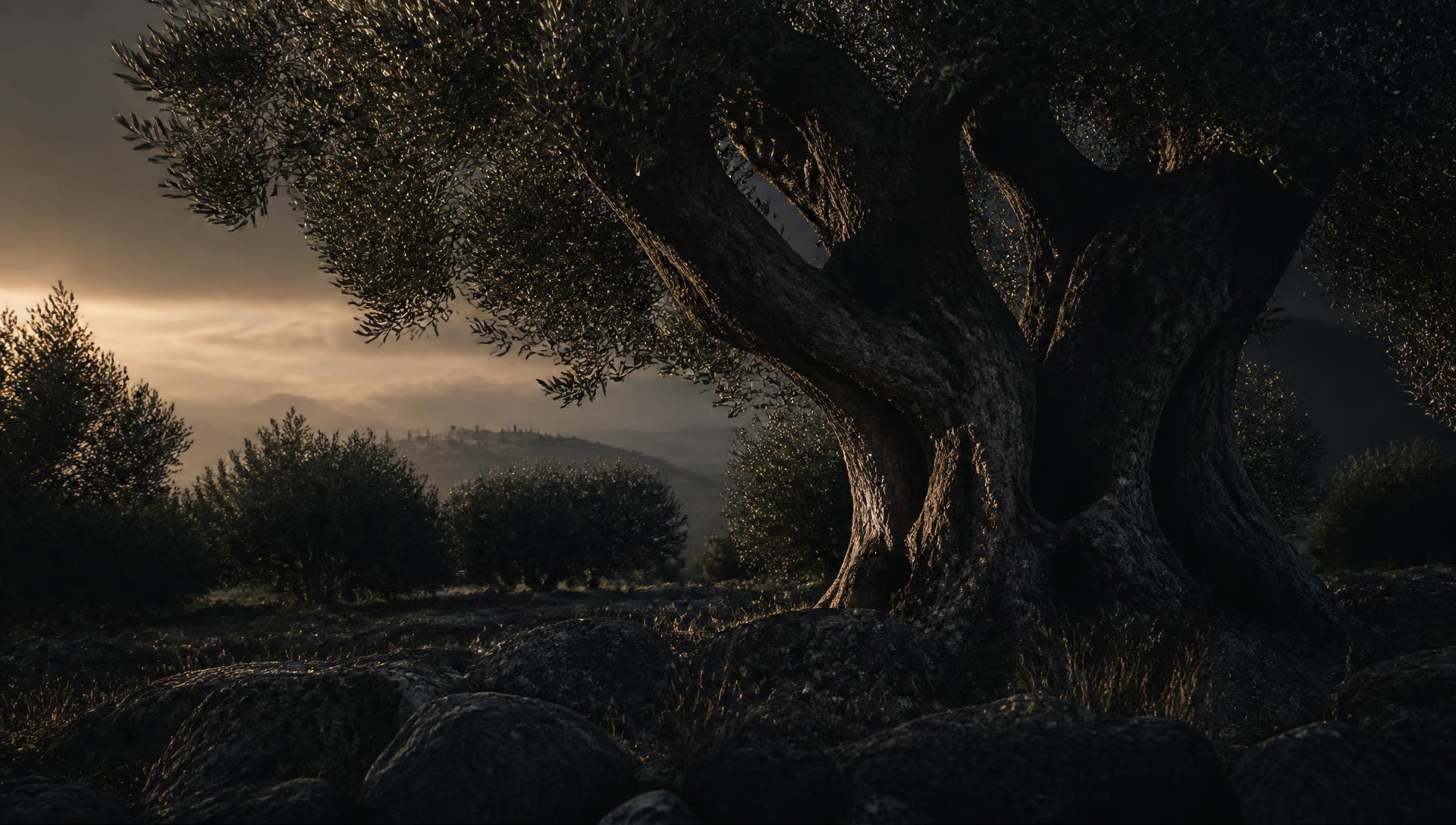
Day one: reading the fruit
The decision to start picking is made in the grove with a knife, not in an office with a calendar. You cut fruit open and look at the flesh: still white and firm means early, purple through to the stone means late.
This year the first violet appeared on the lower terraces in the last days of September, about a week ahead of the ten-year average, following an unusually dry August.
We opened the mill on the fourth of October with three hundred crates staged in the shade.
Days two to five: the pace problem
Green fruit clings. A picker who can strip forty kilos an hour from ripe trees manages half that at the start of the window, and mechanical shakers have to be run gently to avoid bruising.
Everything moves in shallow crates, never sacks. A bruised olive begins degrading immediately, and the resulting free acidity cannot be undone at the mill.
Fruit picked before eleven arrives at the mill by two. Nothing waits overnight.
Days six to eight: rain
Forty millimetres in a night. Wet fruit dilutes the paste, complicates separation and raises the risk of fermentation in the crates, so we stopped for thirty-six hours and let the trees dry.
The lost days matter. Every day of delay costs phenolic content, and the whole point of the early pick is to capture it.
We restarted on the eighth and ran the mill until two in the morning for three consecutive nights.
Days nine to eleven: the tank that becomes Lumière
The best fruit of any harvest comes from the oldest terraces at four hundred metres, where yields are miserable and aromatics are extraordinary.
That fruit was milled separately at 22°C and settled under nitrogen in a single stainless tank. Laboratory analysis came back at 0.16% free acidity and 612 mg/kg total phenols.
The panel session was held eleven days later. Green almond, tomato leaf, white pepper, no defects. That tank is the oil we bottled as Lumière Early Harvest.
About the author
Nikos Papadakis
Harvest Director, Messenia
Every Journal article is written in-house by someone who works with the oil directly, reviewed against the current FDA and CFIA regulatory position, and updated when the underlying evidence or legislation changes. Read our editorial and quality standards.


